
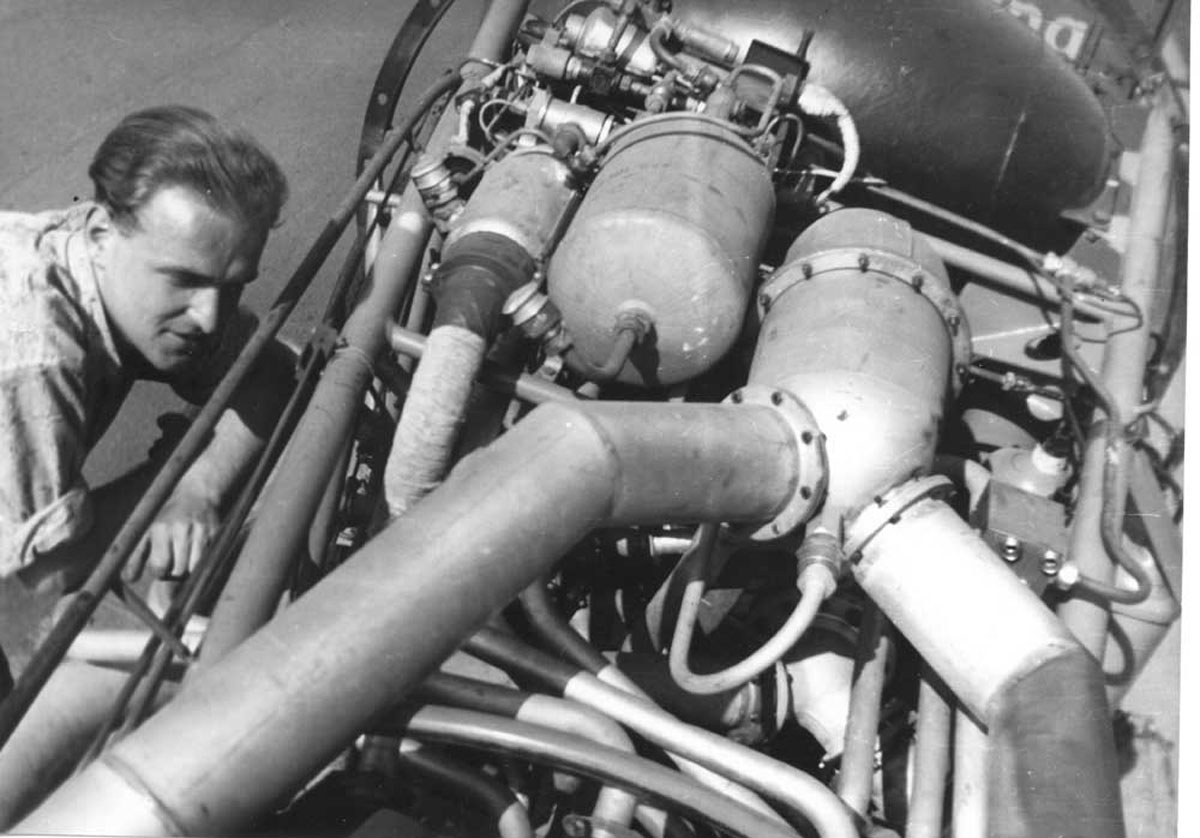
Did every V2 rocket launched during WWII use a secret afterburner for additional thrust? It may seem strange to ask this so many decades after the last V2 flew, given the extensive study of the V2 and its foundational role in modern rocketry. How could something so significant go unnoticed for so long?
The answer (spoiler alert!) is that it wasn’t overlooked; a brilliant young American scientist discovered this phenomenon and accurately described its functioning. However, his team’s technical paper detailing the afterburner remained unpublished until recently. Before it was declassified in 1999, only about 30 people had been permitted to view the document. In this video, Robert will discuss the findings of secret report 708 and explain why the designers of the V2, based at wartime Peenemunde in Germany, missed this phenomenon and failed to understand the contribution of the afterburner to every successful missile launch.
We created a shorter version of this video for Turbopump Part 2. This extended and revised version corrects a shortcoming of the earlier release regarding Germany’s limited progress in long-range telescopic observation of rocket engine phenomena.
Literature and references
Edson J.B. (1949) Optical Studies of the Jet Flame of the V-2 Missile in Flight. Army ballistics research lab: ABERDEEN PROVING GROUND.

